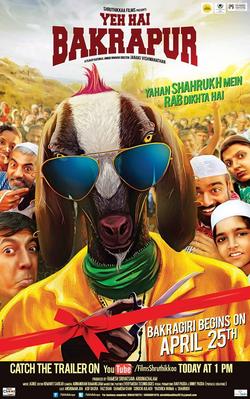
- Directed by Janaki Vishwanathan
- Produced by Ramesh S Arunachalam
- Written by Janaki Vishwanathan
- Starring : Anshuman Jha, Asif Basra ,Suruchi Aulakh, Faiz Khan, Yoshika Verma, Vinay Varma
- Music by Score: Aditya Pushkarna
- Songs:Agnee (band)
- Cinematography Abinandhan Ramanujam
- Edited by Hemanti Sarkar
Gone are those occasions when female chiefs made movies about female heroes. Janaki Vishwanathan’s hero is neither man nor lady.
It’s a goat!
Story
Weaving a plot in and around the anointment of a goat in a languid biased Muslim-commanded villa, Janaki’s film makes a world that appears to be solidified in a condition of suspicious backwardness and neediness. But Yeh Hai Bakrapur is certainly not a tragic film.
The energetic offhanded plot about a goat named, ahem, Shah Rukh who secures a perfect status for no issue of its own, has a lot of nibble and brio. Despite the fact that it at last arrives at an offensive questionable end, there is sufficient meat in the story to bite on.
The chief keeps the procedures on a moderate consume, deciding on a modest representation of the truth and subliminal amusingness where she could have pulled out all stops and given Shyam Benegal’s Welcome To Sajjanpur a run for its cash. When the procedures go to a pounding end, the portrayal hasn’t pushed ahead to anyplace near a nirvana, nor have the characters advanced.
Twist
The staleness of the milieu hindered by a senseless energy over a profoundly honored goat, is faltering in its nullity. Celluloid pictures of provincial neediness are commonly horrid and deplorable. This one goes the other way. The universe of Yeh Hai Bakrapur is flush with fun, not really purposeful.
The characters appear to exist on two levels, both as models and people epitomizing the quirks of a network thinking about internal partialities, and attempting to adjust individual conditions inside the setting of immensely unusual situation that overwhelms the soothing town.

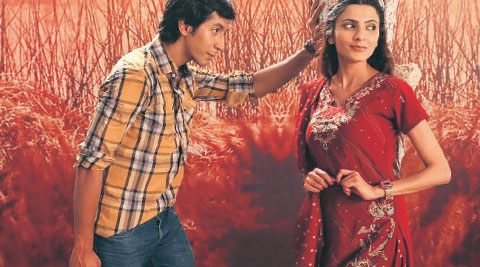
There is likewise the subject of the urban invasion in provincial India through the character played by Anshuman Jha. A town hairdresser’s child and a so called beautician with a quality of misleading blamelessness, Jha’s Jaffar brings into the story a scramble of rushed progressiveness in the perishing, rotting town.
Songs
What’s more, directing the financial frenzy that assumes control over the town is the benevolence of a young man (Shameem Khan) and the goat. A representation of honesty in a world administered by control!
The goat’s fame with the two networks guaranteeing its consideration can be viewed as an allegory for the sort of legends we look for in the present occasions. Then again, the whole brouhaha over an out of nowhere iconised goat can be delighted in as only a satire on sublime goof-ups.
Given either alternative, the film has some tasty exhibitions. Each on-screen character gets a hang of the sham and mixes in like manner. Be that as it may, theater on-screen character Suruchi Aulakh is route in front of the other in discovering her furrow right now about a town filled with sham and fanaticism.
Performances
For a film that confirms its parody by concentrating perseveringly on the peculiarities of its characters, there is a considerable amount of clean in the introduction. The music is an intriguing blend of the local society sounds and conventional parody.
Conclusion
The geography is firmly lucid. This is a beguiling blistering contemptuous illustration on dazzle confidence, destitution and strict lip service that appears to be sarcastic sustenance in the true provincial Muslim milieu where guiltless love and manipulative realism exist together.
You may not be overpowered by Vishwanathan’s parody. Be that as it may, you won’t leave away without a grin and smile right now observe at provincial India where consistently resident is a genuine consideration searcher.
 tamilrockers